01
Evidence
Retain the source and context of assessment findings, observations, learner voice and professional information.

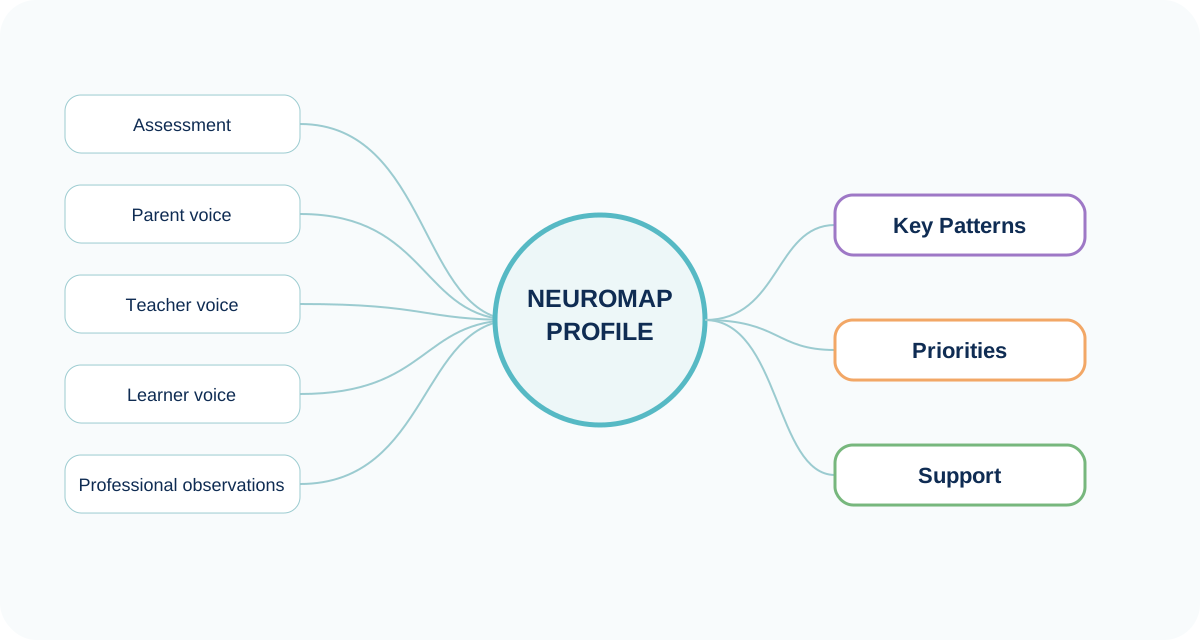
NeuroMap is built around a simple idea: assessment information becomes more useful when it is connected into a functional learner profile and carried through into priorities, implementation and review.
A learner may have cognitive scores, attainment results, teacher observations, parent observations, previous reports, support plans and specialist input. Each source can be useful on its own, but everyday decisions depend on understanding how the pieces interact.
NeuroMap is the connective layer. It preserves the evidence, identifies patterns, translates those patterns into functional priorities and gives implementation a structure that can be reviewed.
Retain the source and context of assessment findings, observations, learner voice and professional information.
Identify interconnected patterns, strengths, barriers, discrepancies and functional implications.
Translate complexity into a manageable set of priorities linked to the learner’s current educational demands.
Define role-specific actions across the people and settings supporting the learner.
Agree observable indicators and revisit what should continue, change or stop.
| Common endpoint | NeuroMap pathway |
|---|---|
| Separate scores and findings | Connected evidence and pattern architecture |
| Static summary | Functional learner profile |
| Long recommendation list | Prioritised actions |
| General advice | Role-specific implementation |
| Support happens informally | Shared pathway with agreed responsibilities |
| Review if someone revisits the report | Observable indicators and planned review |
The profiling layer connects evidence into an integrated explanation of how the learner’s strengths, difficulties, context and educational demands interact.
Explore ProfilingThe implementation layer turns that profile into shared priorities, role-specific action and reviewable support.
Explore ImplementationNeuroMap is currently delivered through professional educational work. Existing assessment evidence can be used where appropriate; additional assessment may be recommended when important questions remain unanswered.
This provides a practical environment in which the framework can be refined against real family, school and learner needs.
The long-term opportunity is to make the NeuroMap architecture increasingly repeatable and technology-supported: structured evidence capture, visual profiling, collaborative implementation and progress review — without replacing the professional judgement on which good educational decisions depend.
Follow the evidence through pattern identification, priorities and implementation.
Explore the Fictional NeuroMap